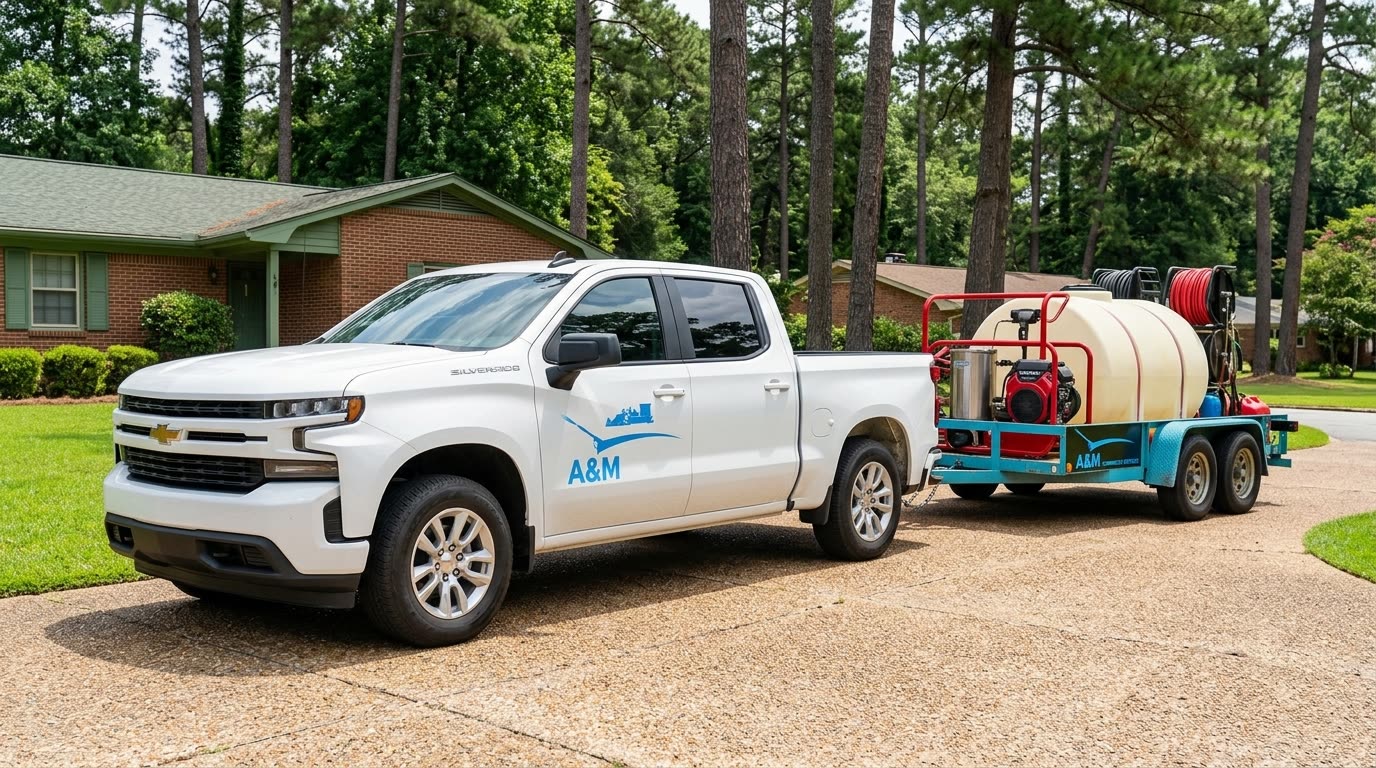
Big surfaces. No problem.
Parking garages, parking lots, plazas, loading docks, warehouses, and industrial facilities. When the job is too big for a typical crew, we bring the commercial hot-water equipment, the manpower, and the scheduling to get it done clean — with minimal disruption to your operation.
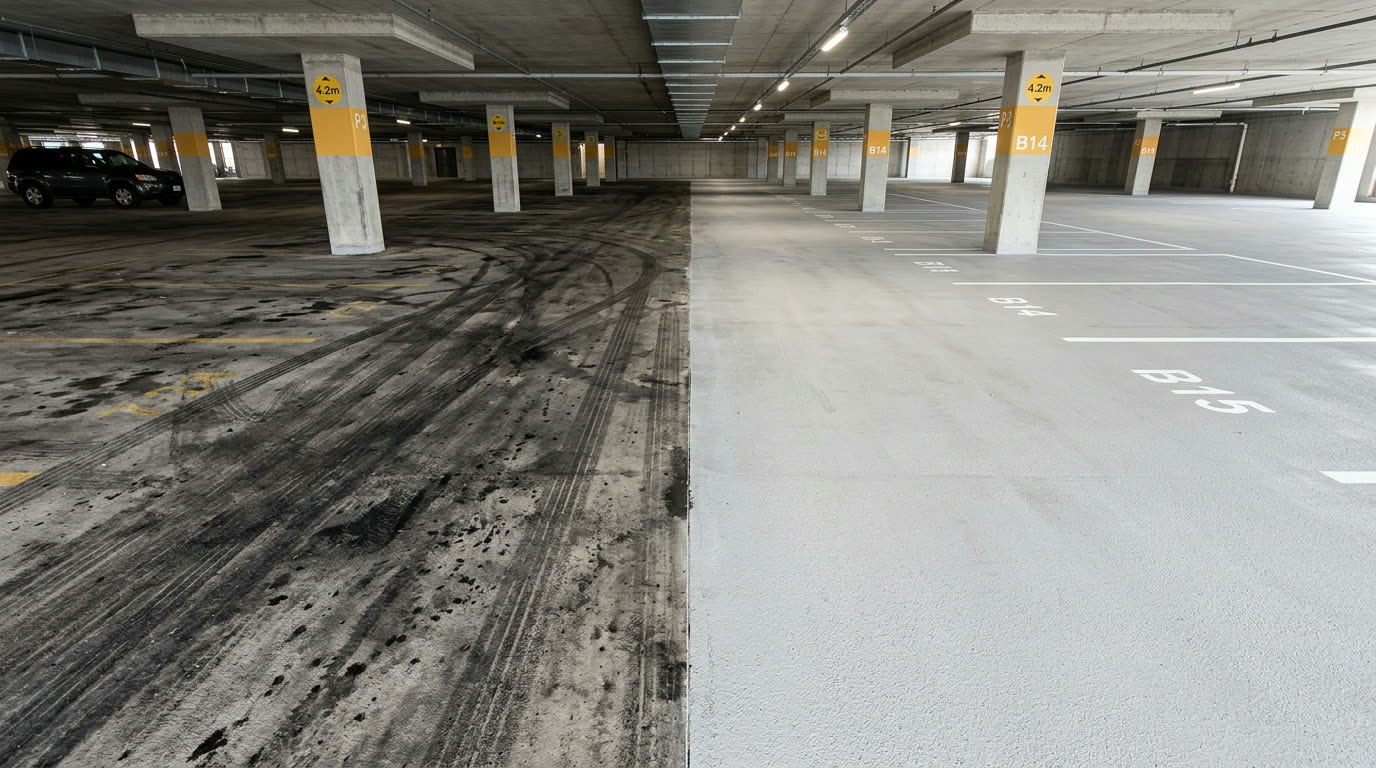 Before → After
Built for the big jobs.
Parking Garages & Decks
Multi-level decks, ramps, and stairwells — oil, rubber, and grime cut from the surfaces customers actually touch.
Parking Lots
Lot-wide cleaning, stall striping prep, oil-stain treatment, and entrance/drive-lane refresh.
Plazas & Storefronts
Retail centers and shopping plazas kept presentable for tenants and foot traffic.
Loading Docks
Grease, debris, and buildup blasted from docks, bays, and high-traffic service areas.
Warehouses & Industrial
Exterior walls, slabs, and equipment pads at warehouses and industrial facilities.
Sidewalks & Walkways
Long runs of public concrete cleaned and gum-removed across large properties.
Equipment and crews that match the job.
Large properties need real commercial hot-water units, water supply, and the manpower to cover ground fast. We scope the whole site, schedule around your operating hours, and document the work zone by zone so ownership sees exactly what was done.
- After-hours & phased scheduling
We work around traffic and tenants. - Zone-by-zone documentation
Before/after across the whole property. - Recurring large-property programs
Keep the whole site on a schedule.
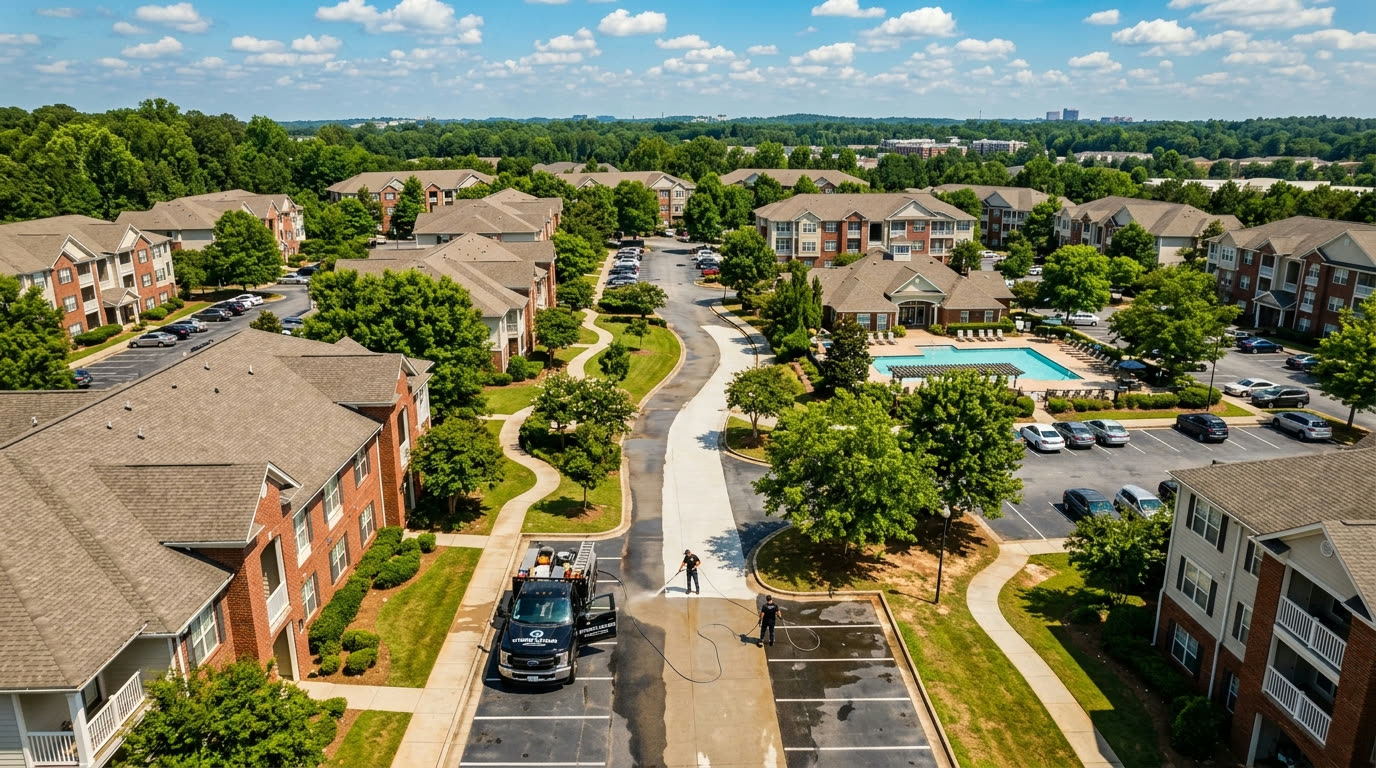 Property-wide service
On a property this size, dirt is a liability, not a look.
A stained apartment breezeway is a complaint. A slick deck ramp or an oil-tracked dock is a different category of problem entirely — and it doesn't stay a maintenance issue once someone goes down on it.
Slip exposure is the real number
Algae on a walkway, oil film on a deck ramp, grease tracked out of a dock bay — these are the surfaces incidents happen on. When one does, the first question asked is what the maintenance record looks like. A documented cleaning schedule is a materially better answer than a photograph of the surface taken after the fact.
Tenants read the exterior as management quality
Retail and office tenants judge how a center is run by the lot, the walkways and the entrances — the parts their customers cross before reaching the door. It surfaces at renewal, in rent negotiations, and in whether a struggling tenant blames their own numbers or blames the property.
Deferred cleaning becomes resurfacing
Oil left in concrete migrates and permanently stains. Organic growth holds moisture in the slab. On a lot or deck measured in tens of thousands of square feet, letting it go long enough turns a cleaning line item into a sealing, patching or resurfacing project — an order of magnitude more expensive and a capital request instead of an operating one.
Most vendors quote big jobs. Fewer can finish them.
The common failure on a large property isn't a bad wash. It's a crew that bids the square footage, arrives with residential equipment, gets through a third of the site, and asks to come back next weekend — while your lot sits half-clean and visibly two-toned.
Water is the constraint nobody plans for
A large site consumes water faster than a single spigot can deliver it. Without a supply plan — tanks, buffering, staged refills — a crew spends the day waiting on a hose instead of cleaning. We scope water source and volume before the date is set, because it's the most common reason big jobs run over.
Coverage rate, not just equipment
Commercial hot-water units matter, but so does how many run at once and how many hands are on site. We size the crew to the square footage and the window you've given us, so the property is finished as a property rather than left in visible patches.
Working a property that can't close
Lots, decks and docks stay in use. We phase by zone, work nights or off-peak where it's needed, and stage cones and signage so traffic keeps moving. Your operation isn't interrupted and nobody walks across a surface that's still wet.
Runoff handled deliberately
Washing at this scale moves real volume, and on industrial and commercial sites where it goes matters. We manage flow, containment and collection as part of the scope rather than treating it as somebody else's problem once the truck pulls off.
How large-scale work is priced.
Square footage sets the floor. Everything below is what separates two bids that look identical on paper.
Measured area and surface type
Flat lot, multi-level deck, dock apron and warehouse elevation all clean at different rates. Area alone doesn't price a job — the surface and what's ground into it does.
Soil load and contaminant
Oil and grease need heat and dwell time. Rubber, gum and organic growth each behave differently. A deck that's never been done doesn't price like one maintained on a cycle.
Working window
Daytime access on a live site is slower and more constrained. Nights, weekends and phased zones cost more per hour but frequently less overall, because the crew moves without stopping for traffic.
Water and access logistics
On-site supply versus hauled water, elevation changes, distance from staging to work face, gate and clearance limits on a deck. These set the real hours more reliably than area does.
Containment requirements
Sites with stormwater sensitivity or collection requirements need equipment and labor allocated to it. Scoped up front, itemized on the quote, never discovered mid-job.
Frequency
Annual, semi-annual or quarterly changes everything. Maintained surfaces clean faster, cost less per visit, and never reach the condition that makes a first wash expensive. Multi-property portfolios price on route.
We walk the site before quoting — including the parts of it that decide the schedule rather than the price. A number produced from a satellite image and a square footage figure is a guess, and on a property this size a guess becomes a change order.
Anyone can bid the square footage.
They quote the square footage. We scope the site.
Access, water, working window, containment and staging are what decide whether a large job finishes on schedule. Pricing off an area figure alone is how a bid comes in low and ends in a change order.
They need your property closed. We work around your operation.
Phased zones, night and off-peak scheduling, cones and signage staged so traffic keeps flowing. Tenants and customers keep using the property while it gets cleaned.
They wash and leave. We document zone by zone.
Before and after across the whole site, not one flattering angle. On a property this size that's the only way ownership can actually see what the spend bought.
They finish a third of it. We finish the property.
Crew and equipment sized to the square footage and the window you gave us. A half-cleaned lot with a visible line down the middle is worse than one nobody touched.
What facility managers ask us.
Almost never. We phase the property zone by zone and stage cones and signage so traffic keeps moving through the areas we aren't working. For decks and busy retail lots we typically run nights or off-peak, which is both safer and faster than working around live traffic.
We carry our own tanks and buffer supply so the crew isn't rate-limited by a single spigot. If on-site water is available and you'd prefer we use it, that's scoped and noted on the quote. Either way it's settled before the date is booked, because water is the most common reason large jobs run long.
We manage flow and containment as part of the job. If your site has specific stormwater or collection requirements — common on industrial and some retail properties — tell us at the walkthrough and we'll scope the containment and equipment into the quote rather than improvising on the day.
Usually a substantial improvement, sometimes complete removal. It depends on how long it sat and how porous the slab is — heat and the right degreaser lift most of it, but oil that has been soaking into unsealed concrete for years has migrated below the surface. We'll tell you honestly at the walkthrough what to expect rather than promising a result the slab can't give.
It depends on area, surface, soil load and how much of the property has to stay open while we work. We give you a schedule with the quote — including which zones run on which nights — so you can notify tenants once and accurately instead of updating them three times.
More so than at any other scale. Large surfaces are where deferred cleaning turns into resurfacing, and where a first wash after years of neglect costs multiples of a maintained one. Recurring sites also price on route and get scheduling priority. Portfolios run under a single agreement with consolidated billing.
Large-scale pressure washing across metro Atlanta
Got a big property?
Free walkthrough and a scoped quote for the whole site.